
This post contains affiliate links. As an Amazon Associate I earn from qualifying purchases.
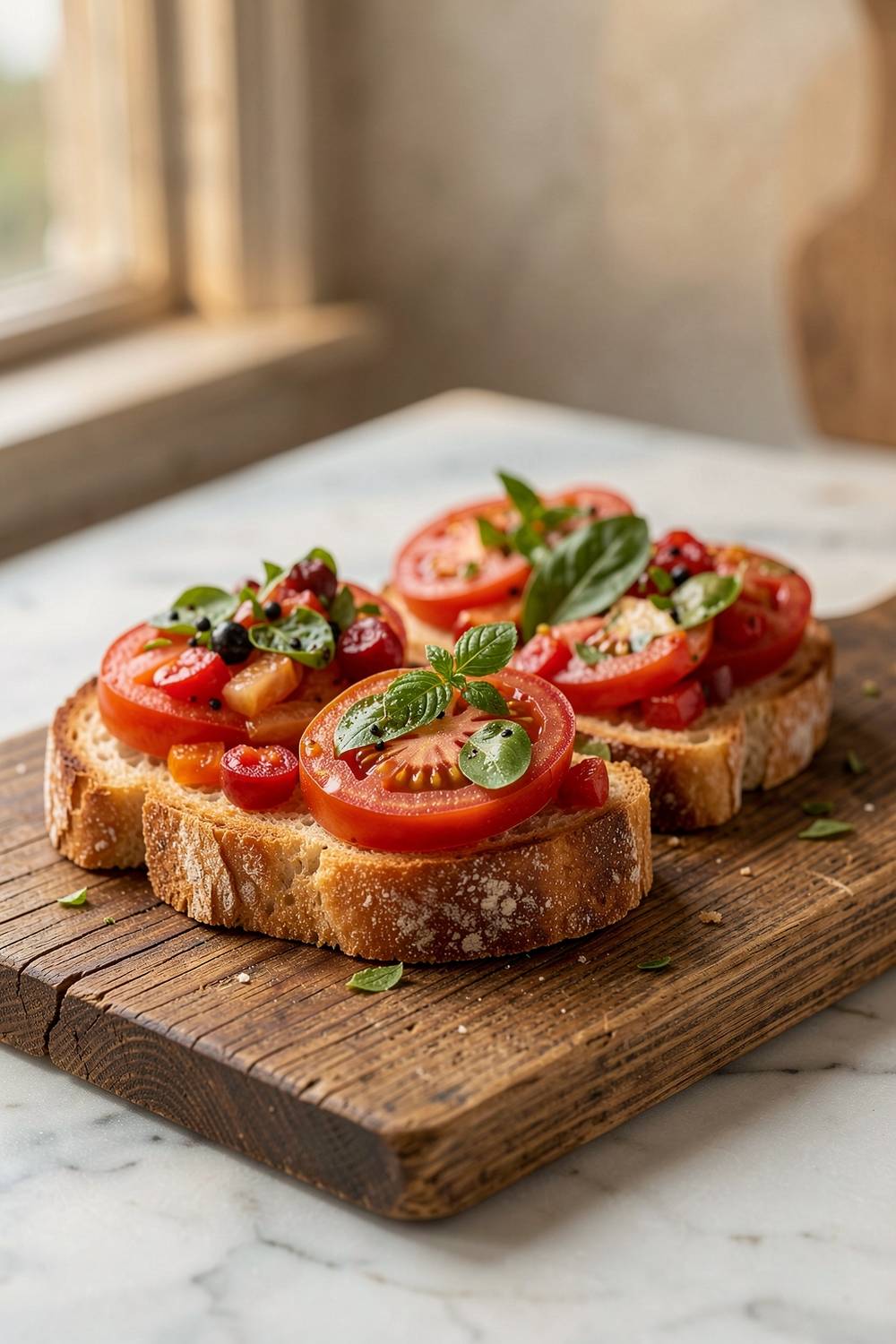
Vegetarian bruschetta is crisp, garlic-rubbed toasted bread topped with juicy marinated tomatoes, fresh basil, and good olive oil. It tastes bright, savory, and slightly tangy, and it takes about 40 minutes from start to finish, including a short rest for the topping.
Why Classic Tomato Bruschetta Is Worth Making at Home
Good bruschetta is all about contrast. The bread should shatter slightly when you bite it, while the tomatoes stay cool, juicy, and just acidic enough to wake up your palate. The garlic, rubbed on the hot toast rather than mixed into the topping, gives a gentle perfume instead of a harsh bite.
It is also one of the easiest ways to show off peak-season produce. With only a handful of ingredients, quality matters. In summer, vine-ripened tomatoes and fresh basil do almost all the work.
As a dietitian, I like that it is naturally plant-based, with fiber from the tomatoes and healthy fats from the olive oil. Pairing tomatoes with olive oil also helps your body absorb lycopene, the pigment that makes tomatoes red.
Ingredients
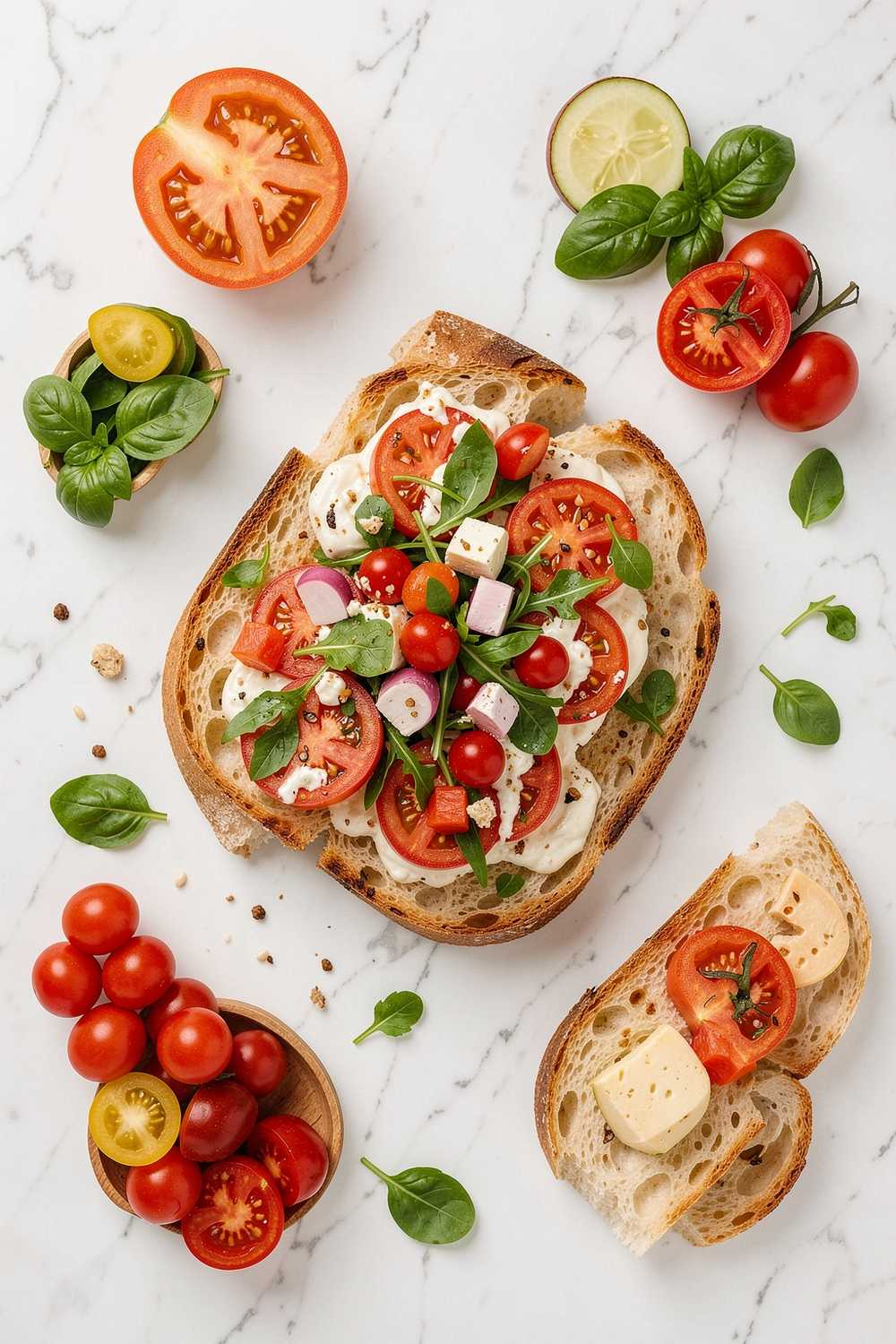
- 1 loaf ciabatta or rustic country bread, about 12 ounces (a baguette also works)
- 1.5 pounds ripe tomatoes, Roma or vine-ripened (use cherry or grape tomatoes out of season)
- 3 tablespoons extra-virgin olive oil, for the topping
- 3 tablespoons extra-virgin olive oil, for brushing the bread
- 2 large garlic cloves (1 minced, 1 halved for rubbing)
- 1 tablespoon balsamic vinegar (red wine vinegar for a sharper edge)
- 1 tablespoon finely minced shallot (optional, or use red onion)
- 1/4 cup fresh basil leaves, torn (packed)
- 1/2 teaspoon fine sea salt, for the tomatoes
- 1/4 teaspoon freshly ground black pepper
- 1 pinch flaky sea salt, for finishing
- 1/4 cup shaved Parmesan-style cheese (optional, see the vegetarian note below)
How to Make Vegetarian Bruschetta
Step 1: Prep and Drain the Tomatoes
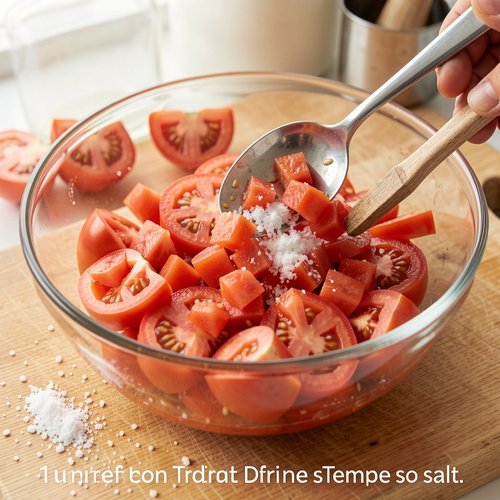
Halve the tomatoes, scoop out the seeds and watery pulp with a spoon, and dice the flesh into 1/4-inch pieces. Toss with 1/2 teaspoon fine sea salt and set in a colander over a bowl for 15 minutes.
You will see a surprising amount of liquid collect underneath. Removing it is the secret to topping that stays on the bread.
Step 2: Marinate the Topping
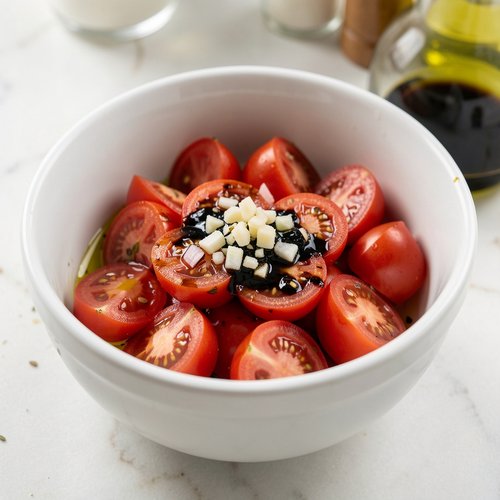
Shake off the excess liquid and transfer the tomatoes to a clean bowl. Add 3 tablespoons olive oil, the balsamic vinegar, minced garlic, shallot, black pepper, and basil.
Stir gently and let it sit at room temperature for 15 to 30 minutes. Taste a spoonful on a piece of bread, then adjust with a little salt or vinegar.
Step 3: Toast the Bread
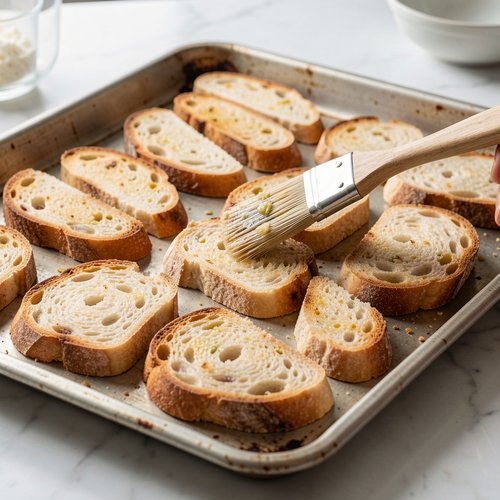
Heat the oven to 425°F. Slice the bread on a slight diagonal into 12 pieces, each about 3/4 inch thick. Arrange them on a baking sheet and brush both sides with the remaining 3 tablespoons olive oil.
Bake for 8 to 10 minutes, flipping once halfway through. You want deep golden edges and a crisp surface, with a bit of chew left in the center. You can also grill the slices for 2 minutes per side.
Step 4: Rub with Garlic
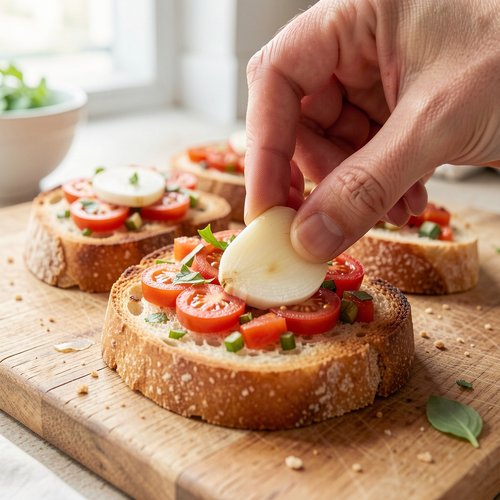
While the toast is still hot, rub the cut side of the halved garlic clove lightly across the top of each slice. The rough, crisp surface works like a grater, so one clove is plenty for all 12 pieces.
Step 5: Assemble and Serve
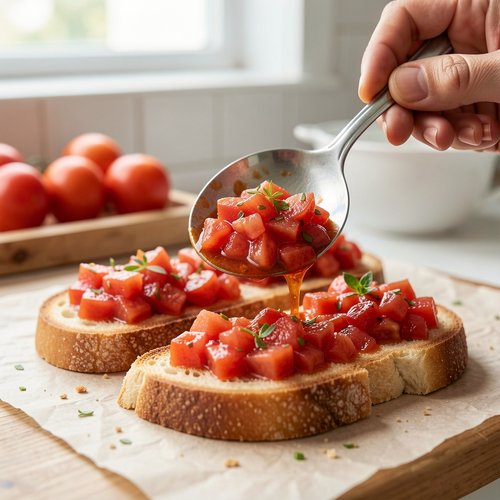
Spoon about 2 tablespoons of tomato mixture onto each toast, lifting it with a slotted spoon so you leave excess marinade behind. Finish with a pinch of flaky salt and a drizzle of the marinade. Add shaved cheese if you like.
Serve within 10 minutes, while the bread is still crisp.
Is Bruschetta Vegetarian?
Traditional tomato bruschetta is vegetarian, since it is built from bread, olive oil, garlic, tomatoes, and basil. The details to check are the add-ons.
Parmigiano-Reggiano is made with animal rennet, so strict vegetarians should skip it or buy a hard cheese labeled as made with microbial or vegetable rennet. Some bruschetta served at restaurants is topped with anchovies, prosciutto, or bacon, so it is always worth asking.
How Do You Make Bruschetta Vegan?
Leave out the cheese and you already have vegan bruschetta. Check your bread label too, because most ciabatta and baguettes are just flour, water, yeast, and salt, but some enriched loaves contain milk, butter, or honey.
For a savory, cheesy flavor without dairy, finish the toasts with a sprinkle of nutritional yeast or a few chopped toasted pine nuts. Everything else in the recipe above is already plant-based.
What Are the Best Vegetarian Bruschetta Toppings?
The tomato version is the classic, but the same toasted base supports many seasonal toppings. Here are the combinations I reach for most:
- Whipped ricotta with roasted cherry tomatoes and a drizzle of honey (spring and summer)
- Mashed white beans with lemon zest, garlic, and chopped rosemary (cooler months, and also vegan)
- Sautéed wild mushrooms with thyme and a splash of sherry vinegar (fall)
- Roasted red peppers with capers and parsley
- Fresh mozzarella, sliced peaches, and basil (late summer)
- Hungarian-style lecsó, a paprika-spiced stew of peppers and tomatoes, spooned over toast with a dab of sour cream
Can You Make Indian-Style Vegetarian Bruschetta?
Yes. It is not a traditional dish, but the toast works well as a base for a fusion topping inspired by chaat-style flavors. Replace the basil, balsamic, and shallot in the topping with the following:
- 2 tablespoons finely chopped red onion
- 1 small green chili, seeded and minced
- 2 tablespoons chopped fresh cilantro
- 1 teaspoon lemon juice
- 1/2 teaspoon chaat masala
- 1/2 teaspoon ground toasted cumin
Top each toast with a little crumbled paneer, or use a few cubes of pan-seared paneer. Keep the garlic rub, since it works nicely with the spices.
Can You Turn Bruschetta into Chips or Veggie Burgers?
Yes, both are easy. For bruschetta chips, slice a baguette 1/4 inch thick, brush with olive oil, and bake at 350°F for 12 to 15 minutes until completely crisp. Serve them with the tomato mixture as a dip.
For veggie burgers, spoon well-drained tomato topping over a black bean or portobello burger with a slice of mozzarella. Toast the bun first and add the topping at the last second so it doesn’t turn soggy.
What Can You Serve with Bruschetta?
Bruschetta works well as a starter before a light soup. A bowl of this cozy soup makes a filling vegetarian lunch with a couple of toasts on the side.
Can You Make It Ahead?
You can prepare the parts ahead, but assemble just before serving. The tomato topping keeps in the refrigerator for up to 24 hours, though basil is best added within the last hour. Bring it to room temperature before using.
Ingredients
- 1 loaf ciabatta or rustic country bread, about 12 ounces a baguette also works
- 1.5 pound ripe tomatoes, Roma or vine-ripened use cherry or grape tomatoes out of season
- 3 tablespoon extra-virgin olive oil, for the topping
- 3 tablespoon extra-virgin olive oil, for brushing the bread
- 2 large garlic cloves 1 minced, 1 halved for rubbing
- 1 tablespoon balsamic vinegar red wine vinegar for a sharper edge
- 1 tablespoon finely minced shallot optional, or use red onion
- 1/4 cup fresh basil leaves, torn packed
- 1/2 teaspoon fine sea salt, for the tomatoes
- 1/4 teaspoon freshly ground black pepper
- 1 pinch flaky sea salt, for finishing
- 1/4 cup shaved Parmesan-style cheese optional, see the vegetarian note below
Instructions
Step 1: Prep and Drain the Tomatoes
- Halve the tomatoes, scoop out the seeds and watery pulp with a spoon, and dice the flesh into 1/4-inch pieces. Toss with 1/2 teaspoon fine sea salt and set in a colander over a bowl for 15 minutes. You will see a surprising amount of liquid collect underneath. Removing it is the secret to topping that stays on the bread.
Step 2: Marinate the Topping
- Shake off the excess liquid and transfer the tomatoes to a clean bowl. Add 3 tablespoons olive oil, the balsamic vinegar, minced garlic, shallot, black pepper, and basil. Stir gently and let it sit at room temperature for 15 to 30 minutes. Taste a spoonful on a piece of bread, then adjust with a little salt or vinegar.
Step 3: Toast the Bread
- Heat the oven to 425°F. Slice the bread on a slight diagonal into 12 pieces, each about 3/4 inch thick. Arrange them on a baking sheet and brush both sides with the remaining 3 tablespoons olive oil. Bake for 8 to 10 minutes, flipping once halfway through. You want deep golden edges and a crisp surface, with a bit of chew left in the center. You can also grill the slices for 2 minutes per side.
Step 4: Rub with Garlic
- While the toast is still hot, rub the cut side of the halved garlic clove lightly across the top of each slice. The rough, crisp surface works like a grater, so one clove is plenty for all 12 pieces.
Step 5: Assemble and Serve
- Spoon about 2 tablespoons of tomato mixture onto each toast, lifting it with a slotted spoon so you leave excess marinade behind. Finish with a pinch of flaky salt and a drizzle of the marinade. Add shaved cheese if you like. Serve within 10 minutes, while the bread is still crisp. Rebecca's Tip: When tomatoes are out of season, don't use pale winter slicers. Halve cherry or grape tomatoes, toss them with a little olive oil and salt, and roast at 400°F for about 15 minutes until they are slightly blistered. Their concentrated sweetness makes up for the missing summer flavor.
Toasted slices stay crisp in an airtight container for a day. If they soften, refresh them in a 350°F oven for 3 minutes.
More Recipes to Try

Rebecca Novak is a trained chef with over 10 years of experience in the food industry. She has worked in both fine dining and casual Hungarian restaurants and specializes in creating dishes using fresh, seasonal ingredients. She also loves exploring different cuisines worldwide, which allows her to bring unique flavors and ideas to the recipes she creates for Hungarianchef.com. On Hungarian Chef, Rebecca covers a wide range of home cooking, including dinners, side dishes, appetizers, desserts, sauces, and breakfast recipes. Her posts include comforting classics like cabbage goulash and chicken soup, along with restaurant-inspired favorites. Readers can use her recipes as step-by-step guides, relying on the ingredient lists, timings, storage notes, and substitution tips to plan meals, cook with confidence, and adapt dishes to what's in their kitchen. Read more