
This post contains affiliate links. As an Amazon Associate I earn from qualifying purchases.
Oyako donburi is a Japanese rice bowl topped with chicken and softly set egg simmered in a sweet-savory dashi, soy sauce, and mirin broth. It tastes comforting and gently sweet, with tender chicken and silky egg soaking into hot rice. Plan on about 35 minutes from start to finish, with the rice cooking while you prep.
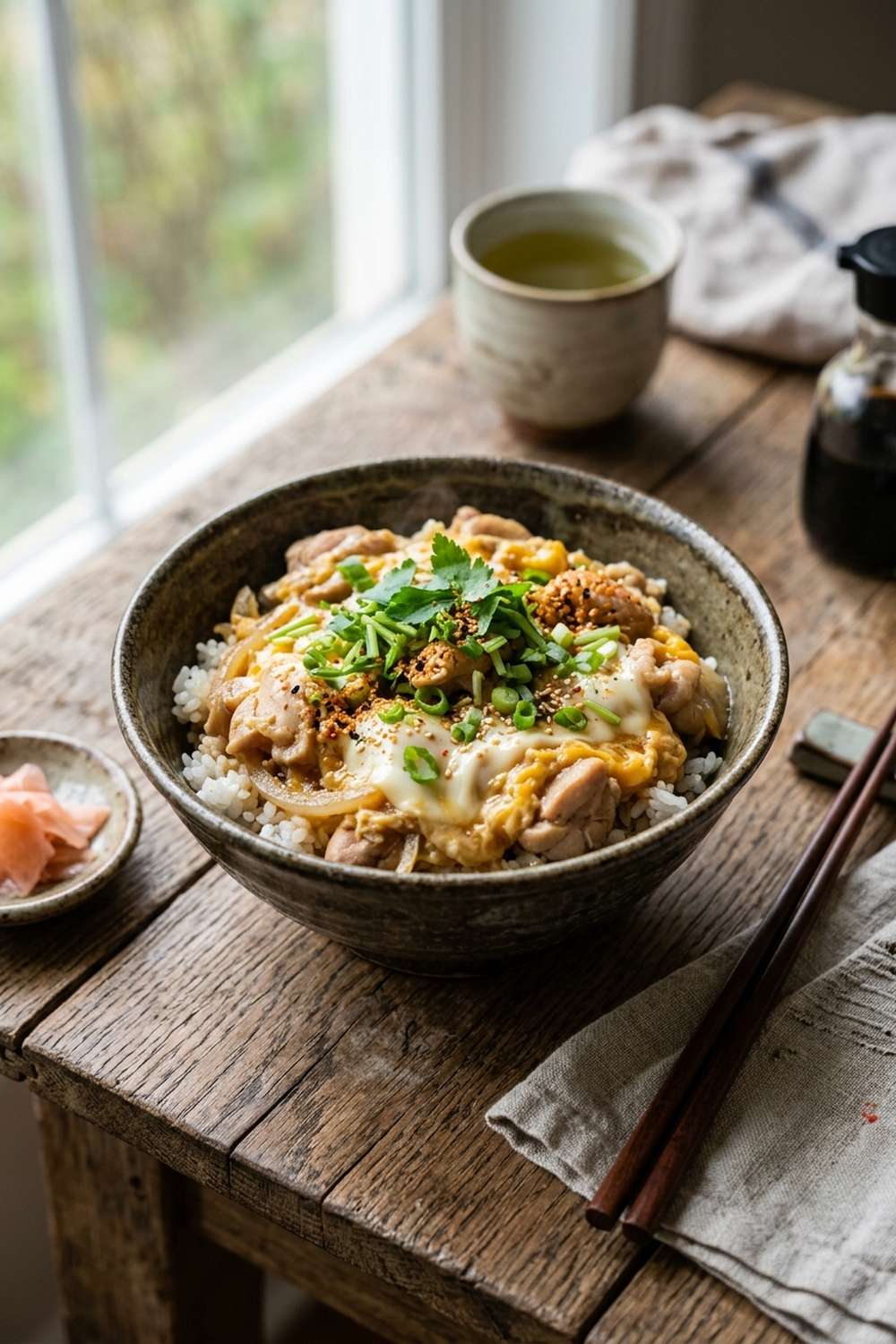
Why Oyako Donburi Is Worth Making at Home
The appeal is contrast within a single bowl. Chicken thigh stays juicy, onion turns sweet and soft, and the egg is barely set, so it works like a sauce over the rice. The seasoned broth drips down into every grain.
From a nutrition view, it’s a balanced bowl: complete protein from chicken and egg, quick-digesting carbohydrate from rice, and cooked onion for fiber. It also costs very little per serving, and everything comes from a regular grocery store.
The dish has an advantage most home cooks overlook. Everything cooks in one skillet in about 10 minutes, so the rice is the only part that needs lead time.
Ingredients
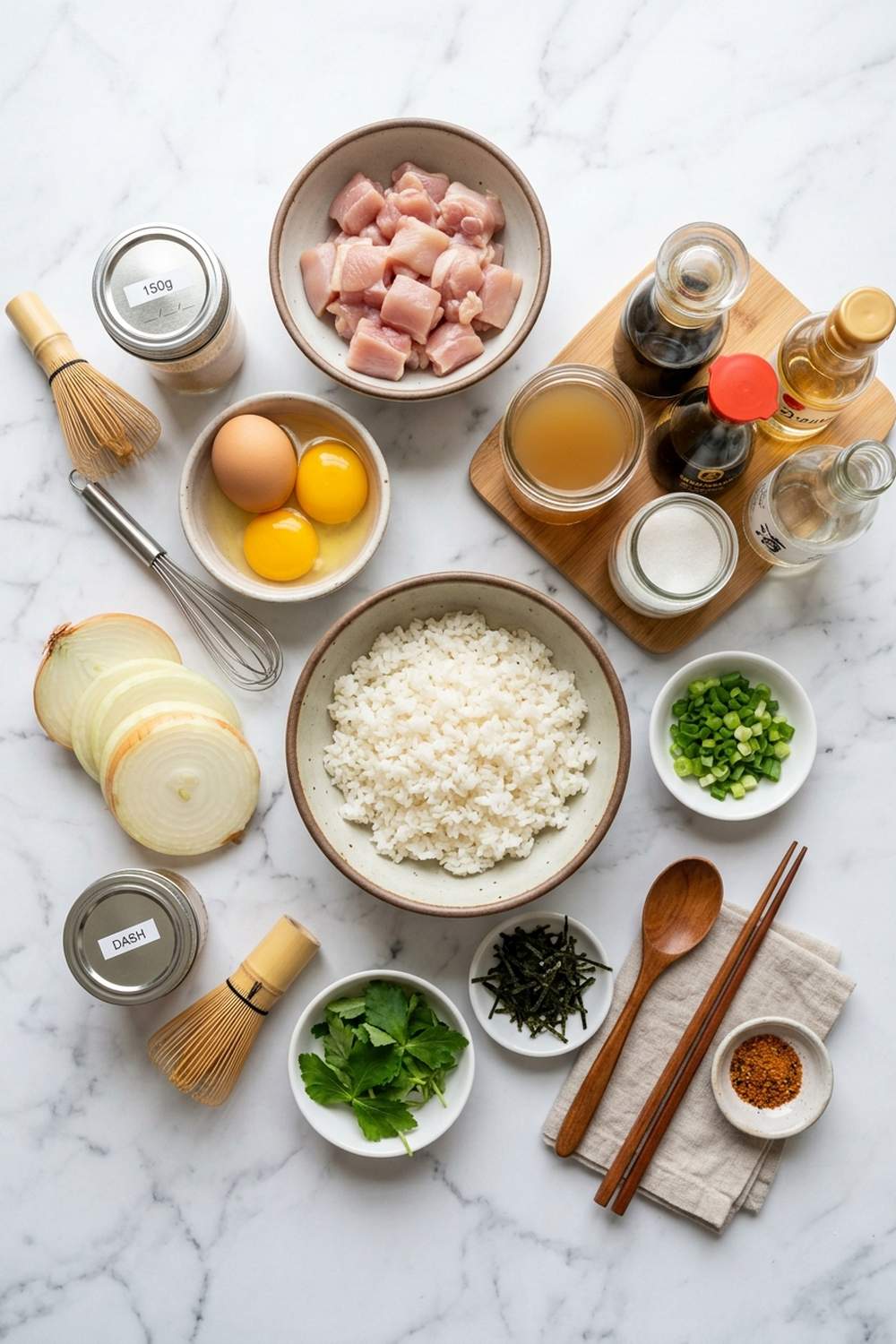
- 1 cup uncooked Japanese short-grain rice (or 2 1/2 cups hot cooked rice)
- 10 oz boneless, skinless chicken thighs (thigh stays juicier than breast)
- 1 medium yellow onion (about 6 oz, sliced 1/4 inch thick)
- 4 large eggs (lightly beaten)
- 3/4 cup dashi (or 3/4 cup water plus 1/2 teaspoon dashi powder)
- 3 tablespoons soy sauce (low-sodium works well)
- 3 tablespoons mirin (or 3 tablespoons water plus 1 teaspoon extra sugar)
- 2 teaspoons sugar
- 2 scallions (thinly sliced, or a handful of mitsuba when available)
- 1 sheet nori (cut into thin strips, optional)
- 1/4 teaspoon shichimi togarashi (optional, for gentle heat)
How to Make Oyako Donburi
Step 1: Cook the Rice
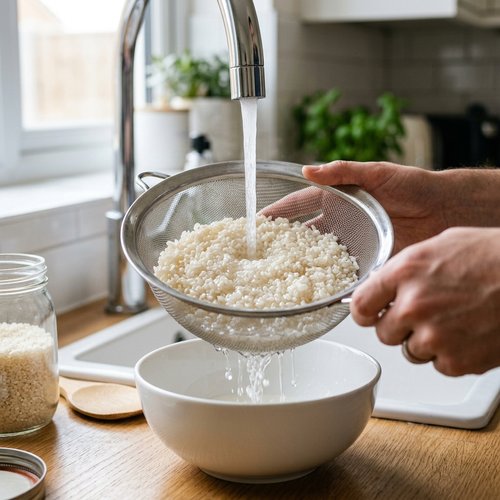
Rinse the rice in cold water, swirling and draining, until the water runs mostly clear. Cook it in a rice cooker with water to the 1-cup line. On the stovetop, simmer 1 cup rice with 1 cup water, covered, on low for 12 minutes. Then rest it off the heat for 10 minutes.
Step 2: Prep the Chicken, Sauce, and Egg
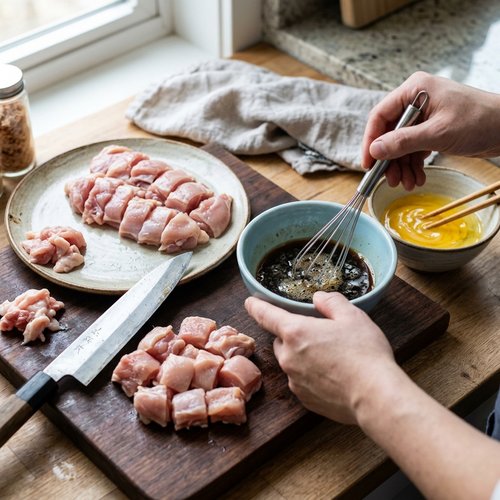
Cut the chicken into 3/4-inch pieces and trim any excess fat. Whisk the dashi, soy sauce, mirin, and sugar together until the sugar dissolves. Beat the eggs only 4 or 5 times, so you still see streaks of white. That uneven mix gives the topping its classic look.
Step 3: Simmer the Onion and Chicken
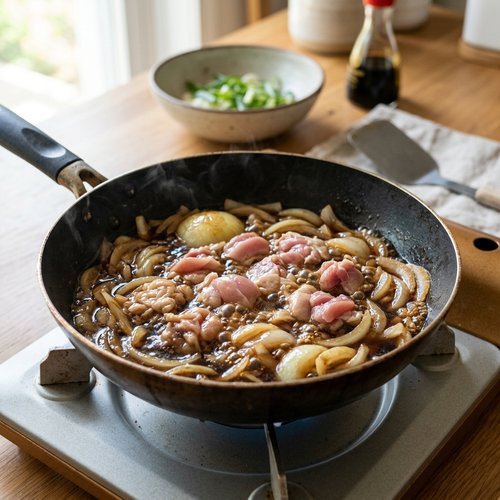
Pour the sauce into a 10-inch skillet and bring it to a gentle simmer over medium heat. Add the onion and cook for 3 minutes, until it begins to turn translucent. Add the chicken in a single layer and simmer 5 to 6 minutes, turning once, until there is no pink inside. The internal temperature should reach 165°F (74°C).
Step 4: Add the Egg in Two Pours
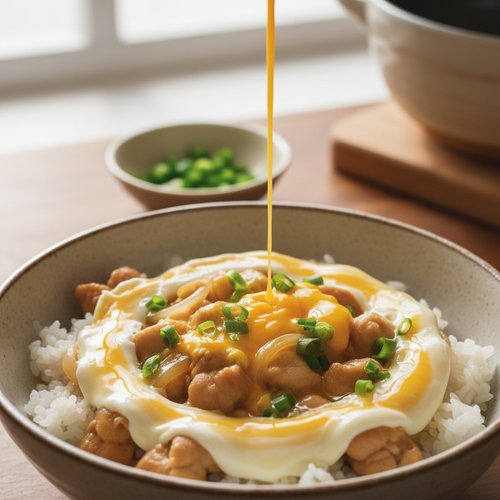
Reduce the heat to medium-low. Drizzle two-thirds of the egg in a circle over the chicken and cook for 30 to 45 seconds, until the edges look set. Pour in the remaining egg, scatter half the scallions on top, cover, and turn off the heat. Let it sit 45 to 60 seconds. The egg should look glossy and just barely set, because it keeps cooking on the way to the bowl.
Step 5: Assemble the Bowls
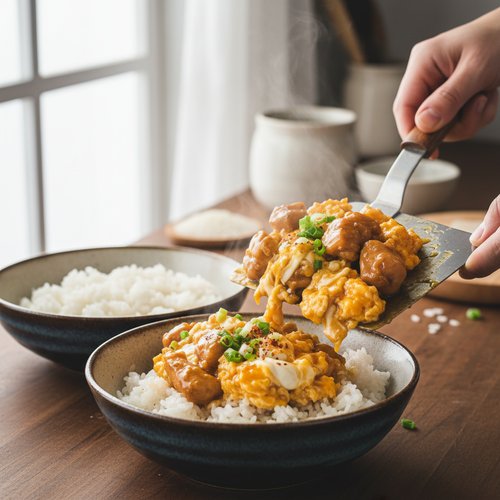
Divide the hot rice between two deep bowls, about 1 1/4 cups each. Slide half the topping over each bowl, pouring the extra broth over the rice. Finish with the remaining scallions, nori strips, and a pinch of shichimi togarashi. Serve right away while the egg is soft.
What Does Oyako Donburi Mean, and What Is in It?
Oyako donburi means “parent-and-child rice bowl,” a reference to chicken and egg in the same dish. “Oyakodon” and “oyako don” are shorter names for the same thing, so there is no difference between oyako donburi and oyakodon.
A standard bowl contains chicken (usually thigh), onion, egg, and rice, with a broth of dashi, soy sauce, mirin, and sugar. Scallions or mitsuba, nori, and shichimi togarashi are common finishing touches. The chicken in “oyako don chicken” is simply bite-sized pieces simmered directly in that sauce.
Oyakodon vs Donburi, Katsudon, and Gyudon: What’s the Difference?
Donburi is the category, and oyakodon is one specific type. “Donburi” means a bowl of rice with a topping, and the word also names the deep bowl itself. So the answer to “what is in donburi” is always rice plus a simmered, fried, or grilled topping.
- Oyakodon: chicken, onion, and soft egg in a sweet-savory broth.
- Katsudon: a breaded, fried pork cutlet simmered briefly with egg and onion, so it has a crisp-then-soft texture.
- Gyudon: thin-sliced beef and onion simmered in a similar broth, usually without egg stirred in, and often topped with pickled ginger.
The three share the same flavor base, so once you can make one, you can make the others by swapping the protein. To make donburi at home, start with good rice, then simmer a protein and onion in seasoned dashi.
Can You Make Oyako Donburi in a Rice Cooker?
Yes, use the rice cooker for the rice and a skillet for the topping. It gives the most reliable results, because a rice cooker can’t hold the gentle simmer the egg needs. The cooker handles the 20 to 40 minutes of rice cooking, and the skillet topping takes about 10 minutes.
Cooking the chicken and egg inside the cooker is possible, but I don’t recommend it. Chicken doneness is hard to check, and the egg tends to overcook. If you want a hands-off approach, start the rice first, prep the topping while it cooks, and keep the rice on its warm setting until the topping is ready.
Is There a Hawaii Version, and What Is Oyako Don with Chuka Wakame?
I’m not aware of a distinct, standardized Hawaii version. Hawaii has a large Japanese-American community, and rice bowls are common there, so the classic method here is what you’d want. For a local-style touch, sprinkle furikake on top or serve the bowl alongside macaroni salad.
Ingredients
- 1 cup uncooked Japanese short-grain rice or 2 1/2 cups hot cooked rice
- 10 oz boneless, skinless chicken thighs thigh stays juicier than breast
- 1 medium yellow onion about 6 oz, sliced 1/4 inch thick
- 4 large eggs lightly beaten
- 3/4 cup dashi or 3/4 cup water plus 1/2 teaspoon dashi powder
- 3 tablespoon soy sauce low-sodium works well
- 3 tablespoon mirin or 3 tablespoons water plus 1 teaspoon extra sugar
- 2 teaspoon sugar
- 2 scallions thinly sliced, or a handful of mitsuba when available
- 1 sheet nori cut into thin strips, optional
- 1/4 teaspoon shichimi togarashi optional, for gentle heat
Instructions
Step 1: Cook the Rice
- Rinse the rice in cold water, swirling and draining, until the water runs mostly clear. Cook it in a rice cooker with water to the 1-cup line. On the stovetop, simmer 1 cup rice with 1 cup water, covered, on low for 12 minutes. Then rest it off the heat for 10 minutes.
Step 2: Prep the Chicken, Sauce, and Egg
- Cut the chicken into 3/4-inch pieces and trim any excess fat. Whisk the dashi, soy sauce, mirin, and sugar together until the sugar dissolves. Beat the eggs only 4 or 5 times, so you still see streaks of white. That uneven mix gives the topping its classic look.
Step 3: Simmer the Onion and Chicken
- Pour the sauce into a 10-inch skillet and bring it to a gentle simmer over medium heat. Add the onion and cook for 3 minutes, until it begins to turn translucent. Add the chicken in a single layer and simmer 5 to 6 minutes, turning once, until there is no pink inside. The internal temperature should reach 165°F (74°C).
Step 4: Add the Egg in Two Pours
- Reduce the heat to medium-low. Drizzle two-thirds of the egg in a circle over the chicken and cook for 30 to 45 seconds, until the edges look set. Pour in the remaining egg, scatter half the scallions on top, cover, and turn off the heat. Let it sit 45 to 60 seconds. The egg should look glossy and just barely set, because it keeps cooking on the way to the bowl.
Step 5: Assemble the Bowls
- Divide the hot rice between two deep bowls, about 1 1/4 cups each. Slide half the topping over each bowl, pouring the extra broth over the rice. Finish with the remaining scallions, nori strips, and a pinch of shichimi togarashi. Serve right away while the egg is soft. Rebecca's Tip: Take the pan off the heat when the egg still looks slightly underdone. Carryover heat finishes it, and overcooked egg turns dry and rubbery. If sodium is a concern, use low-sodium soy sauce and unsalted homemade dashi. You can also fold a handful of baby spinach into the broth with the chicken for extra greens.
Chuka wakame is a bright green, sesame-dressed seaweed salad, not an ingredient in the oyakodon itself. When a menu lists “oyako don with chuka wakame,” it most likely means the bowl comes with that salad as a side. A small scoop of the tangy, sesame-scented seaweed works well against the sweet, soft bowl.
More Recipes to Try
- Shashlik Recipe – Hungarian Chef
- Stuffed Cabbage Hungarian Recipe – Hungarian Chef
- Slow Cooker Ketchup Brisket (Tender, Sweet and Tangy)

Rebecca Novak is a trained chef with over 10 years of experience in the food industry. She has worked in both fine dining and casual Hungarian restaurants and specializes in creating dishes using fresh, seasonal ingredients. She also loves exploring different cuisines worldwide, which allows her to bring unique flavors and ideas to the recipes she creates for Hungarianchef.com. Read more